Removing a Rails database column can crash old processes mid-deploy. This walkthrough shows the safe order: ignored_columns first, migration later, plus how to handle columns that still hold data and what the schema cache does behind your back.
Slow SQL queries in Rails can be caught in development, before they become production fires. Using ActiveSupport::Notifications and the sql.active_record event, you build a small performance guard that logs every query above a time threshold straight to your console.
Database pagination goes beyond LIMIT and OFFSET: ROW_NUMBER(), the FETCH clause, and keyset pagination each behave differently as tables grow. SQL examples for every approach, why offsets get slow on big datasets, and a verdict on which method scales best.
Database sharding in Rails step by step: create a separate database per shard, wire them up in database.yml, and query across them. Plus how sharding differs from partitioning, with a native PostgreSQL partitioning example done through Rails migrations.
Rails locking strategies for concurrent updates: optimistic locking with a lock_version column that works out of the box, pessimistic locking with lock! and with_lock, and practical ways to rescue and resolve the StaleObjectError that optimistic locking raises.
Rails eager_load, includes, preload, and joins each fight slow queries differently: LEFT OUTER JOIN versus separate queries, how includes picks its strategy, and when a plain joins is enough. Clear examples showing which loading method to choose for each situation.
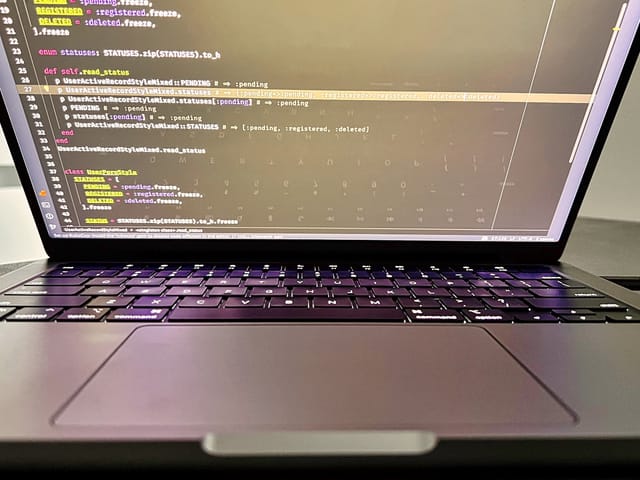
Three ways to define constants and enums per class in Ruby: the ActiveRecord enum macro, a mixed style combining frozen constants with enum, and a dependency-free PORO version. Code for each solution and a comparison to help you pick the right one.
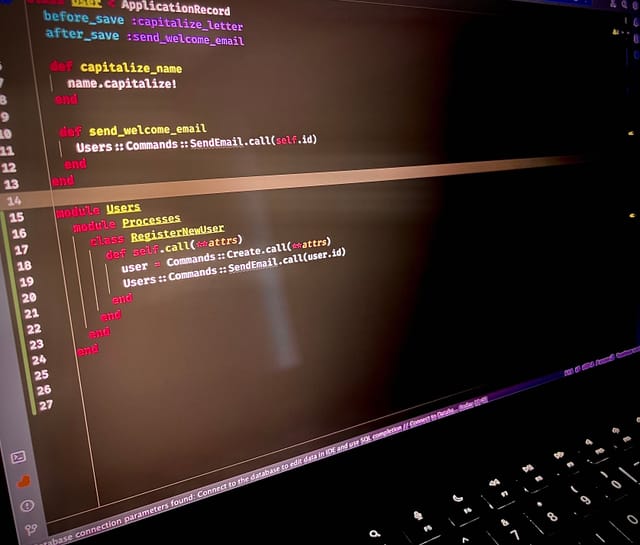
ActiveRecord callbacks bring tight coupling, slower transactions, and painful debugging. Why before_save and after_save hooks in Rails models cause trouble, and how replacing them with an explicit process class makes the same flow readable and easy to debug.
 ruby-on-rails