Domain model metrics turn "the split feels wrong" into something you can check: how many teams one change drags in, which arrows point the wrong way, why lines of code lie inside aggregates, and why you should sketch four models before picking one.
Generation got a hundred times faster and reading did not. What that actually breaks in code review, why spec-driven development collapses into a compiler, why clean code matters more when agents read it, and what to build instead: an ontology of your own development process.
The future of programming is not more code. It is a knowledge graph, an event log and agents you route in code, not in prompts. My opinion on which skills pay off this year, the mistakes that sink agent projects, and why a small team with legible data beats a big one.
Instagram hit the connection wall, the vertical scaling wall and the ID wall on Postgres, and cleared all three without switching databases. Here is what broke, in what order, plus the logical sharding and Snowflake ID patterns you can copy before your own database runs out of room.
Basecamp's Campfire, unchanged, compiled to one native binary: 5x the throughput on 366 MB instead of 4.6 GB. How Roundhouse lowers Rails, how Matz's Spinel compiler turns that Ruby into C, which Ruby constructs it refuses, and how far you can push it on your own app today.
Jev, TypeSafe's System One model, returns typed decisions with calibrated probabilities in 70-500ms instead of generating text. Here is what the "cannot hallucinate" claim actually guarantees, where it breaks in production, a forty-line Ruby client, and how to test it on your data.
Postgres 19 adds SQL/PGQ graph queries over the tables you already have, an atomic ON CONFLICT DO SELECT upsert, and REPACK CONCURRENTLY that returns disk space without locking the table. Here is what each one replaces, with working SQL and the limits the release notes do not shout about.
Docker Swarm mode is not dead, but it is not growing either. Build a three node cluster from zero, deploy a stack, handle secrets and volumes, dodge the Compose file trap, and see plainly when Kubernetes or Kamal is the better call.
A modular monolith in Rails buys you one thing: a checked constant dependency graph. Packwerk 3.3 and Rails engines run against a real app show where the boundary holds, where a single method argument walks straight through it, and which of your problems stay exactly as they were.
YouTube runs the biggest recommendation feed on the planet, and it does not win with rules. See how its homepage ranks on satisfaction instead of clicks, learns per user, and trusts reactions, then how to build the same ideas into your own app with Ruby and SQL.
Shrink a Rails Docker image from 1 GB to under 150 MB in seven ordered steps: smaller base image, .dockerignore, multi-stage builds, layer ordering, distroless with its honest caveat, and digest pinning. Every step is measurable the same afternoon.
Refactoring a live monolith is a risk problem, not a style problem. A strategy built on real pain points: modular monolith boundaries enforced by tools, boring rollbacks, avoiding the three-week refactoring branch, and saving the expensive decision for last.
AI writes confident Rails code that quietly breaks production standards. Build a quality workflow that catches it: Lefthook gates, Strong Migrations as a hard line, N+1 detection with Prosopite, database checks in layers, and CI that mirrors local hooks.
Removing a Rails database column can crash old processes mid-deploy. This walkthrough shows the safe order: ignored_columns first, migration later, plus how to handle columns that still hold data and what the schema cache does behind your back.
Messaging looks clean on a diagram and gets messy in production. Duplicate messages, slow consumers, fat events, DLQs used as trash cans: what each problem really costs and the patterns (idempotency, event design, async UX) that keep a broker-based system honest.
Fail2ban turns brute-force noise on SSH and your reverse proxy into a boring automated reaction. A practical setup for a VPS or homelab: sane jail config, testing before trusting, notifications without a siren, and where it fits in the wider security story.
DORA metrics explained for engineering leaders: deployment frequency, lead time, change failure rate, time to restore and reliability. What each one really tells you, how to use them to improve delivery, and the anti-patterns that turn them into dashboard theater.
21 engineering lessons that survive contact with production: why simple code beats clever code, technical debt as a communication problem, what actually builds trust in teams, and how senior engineers pick problems. Field notes for real teams, not conference slides.
HTTP caching refresher for engineers: how freshness, revalidation, Vary and Cache-Control really interact, why stale responses can still be useful, what reload actually does, and the boring headers that keep private content out of shared caches.
Rails partials feel free until a page renders hundreds of them. Benchmarks of five rendering strategies (inline ERB, partial loops, collection rendering and more) show which is fastest, why the helper trick backfires, and a practical rule for when to optimize views.
UUIDv7 arrives in PostgreSQL 18 as a built-in uuidv7() function. See what it changes in practice: friendlier indexes than UUIDv4, simpler Rails migrations, a schema example, and the security caveat that time-ordered does not mean secret.
Auditing a legacy Rails codebase starts with one question: what is the team afraid to change? A practical method for finding real hotspots, building a small audit ledger, using tools and AI without drowning in output, and delivering one page that people act on.
Domain model metrics turn "the split feels wrong" into something you can check: how many teams one change drags in, which arrows point the wrong way, why lines of code lie inside aggregates, and why you should sketch four models before picking one.
Basecamp's Campfire, unchanged, compiled to one native binary: 5x the throughput on 366 MB instead of 4.6 GB. How Roundhouse lowers Rails, how Matz's Spinel compiler turns that Ruby into C, which Ruby constructs it refuses, and how far you can push it on your own app today.
Jev, TypeSafe's System One model, returns typed decisions with calibrated probabilities in 70-500ms instead of generating text. Here is what the "cannot hallucinate" claim actually guarantees, where it breaks in production, a forty-line Ruby client, and how to test it on your data.
A modular monolith in Rails buys you one thing: a checked constant dependency graph. Packwerk 3.3 and Rails engines run against a real app show where the boundary holds, where a single method argument walks straight through it, and which of your problems stay exactly as they were.
YouTube runs the biggest recommendation feed on the planet, and it does not win with rules. See how its homepage ranks on satisfaction instead of clicks, learns per user, and trusts reactions, then how to build the same ideas into your own app with Ruby and SQL.
AI writes confident Rails code that quietly breaks production standards. Build a quality workflow that catches it: Lefthook gates, Strong Migrations as a hard line, N+1 detection with Prosopite, database checks in layers, and CI that mirrors local hooks.
Auditing a legacy Rails codebase starts with one question: what is the team afraid to change? A practical method for finding real hotspots, building a small audit ledger, using tools and AI without drowning in output, and delivering one page that people act on.
Ruby::Box in Ruby 4.0 isolates monkey patches so one gem's core-class override stops breaking the rest of your process. How the isolation works, what problems with global state it ends, and the limitations to weigh before you rely on it.
Ruby modules often beat classes for service objects: why a shell class like PasswordResetInitiator is procedural code in disguise, using a module as a toolbox, mixins instead of artificial inheritance, and Data objects for tidy parameters.
Ruby 4.0 marks the language's 30th birthday with maturity instead of revolution: saner syntax for multiline conditions, faster boot with fewer requires, a maturing Ractor story, hidden performance gems, and protection against command injection.
Rails performance starts with understanding the GVL: why only one thread runs Ruby code at a time, how that throttles CPU-bound apps, throughput vs latency, choosing a server, offloading to background jobs, and how to instrument and measure before optimising.
DDD is not aggregates first: the discovery process is the heart of it. Why strategy with domain experts beats jumping into tactical patterns, the language pitfalls that derail modelling, the 'what if' trap, and why change must come from above and below.
after_all_transactions_commit solves a classic Rails race condition: a background job looking for a record that is not committed yet. How the new ActiveRecord callback works inside and outside transaction blocks, and when to reach for it.
Microservices vs monoliths is a trade-off, not a dogma. Why companies really migrate (team coordination, not speed), the complexity bill that follows, what DoorDash's transformation shows, and how to pick architecture on evidence instead of fashion.
Sending large files through Rails wastes memory and blocks app workers. X-Sendfile hands the transfer to NGINX while Rails keeps authentication and caching: server configuration, cache headers, testing in development, other HTTP servers, and a complete example.
Basecamp's Campfire, unchanged, compiled to one native binary: 5x the throughput on 366 MB instead of 4.6 GB. How Roundhouse lowers Rails, how Matz's Spinel compiler turns that Ruby into C, which Ruby constructs it refuses, and how far you can push it on your own app today.
A modular monolith in Rails buys you one thing: a checked constant dependency graph. Packwerk 3.3 and Rails engines run against a real app show where the boundary holds, where a single method argument walks straight through it, and which of your problems stay exactly as they were.
Shrink a Rails Docker image from 1 GB to under 150 MB in seven ordered steps: smaller base image, .dockerignore, multi-stage builds, layer ordering, distroless with its honest caveat, and digest pinning. Every step is measurable the same afternoon.
AI writes confident Rails code that quietly breaks production standards. Build a quality workflow that catches it: Lefthook gates, Strong Migrations as a hard line, N+1 detection with Prosopite, database checks in layers, and CI that mirrors local hooks.
Removing a Rails database column can crash old processes mid-deploy. This walkthrough shows the safe order: ignored_columns first, migration later, plus how to handle columns that still hold data and what the schema cache does behind your back.
HTTP caching refresher for engineers: how freshness, revalidation, Vary and Cache-Control really interact, why stale responses can still be useful, what reload actually does, and the boring headers that keep private content out of shared caches.
Rails partials feel free until a page renders hundreds of them. Benchmarks of five rendering strategies (inline ERB, partial loops, collection rendering and more) show which is fastest, why the helper trick backfires, and a practical rule for when to optimize views.
UUIDv7 arrives in PostgreSQL 18 as a built-in uuidv7() function. See what it changes in practice: friendlier indexes than UUIDv4, simpler Rails migrations, a schema example, and the security caveat that time-ordered does not mean secret.
SQLite in production works better than its toy reputation, but only if you know the traps: why WAL mode is non-negotiable, how blue-green deployments break your setup, missing ILIKE, quirky JSON types, and what you honestly gain in return.
Risk management for engineers, without the vibes: use expected value to judge a rewrite, spot base rate neglect and sunk cost in tech choices, apply Bayesian thinking during outages, and price technical debt with a four-step calculation you can run today.
AI agent architecture comes down to three strategies: single agent, sequential, and parallel. When one big prompt loses the plot, how sequential chains buy reliability, where parallel agents crush latency, and the pitfalls of each before you commit.
Ruby::Box in Ruby 4.0 isolates monkey patches so one gem's core-class override stops breaking the rest of your process. How the isolation works, what problems with global state it ends, and the limitations to weigh before you rely on it.
Technical debt is not the real enemy: cognitive load is. Why messy abstractions hurt because of what they do to your brain, how the database quietly kills flow, and how to stop chasing code cleanliness for its own sake and start delivering again.
Ruby modules often beat classes for service objects: why a shell class like PasswordResetInitiator is procedural code in disguise, using a module as a toolbox, mixins instead of artificial inheritance, and Data objects for tidy parameters.
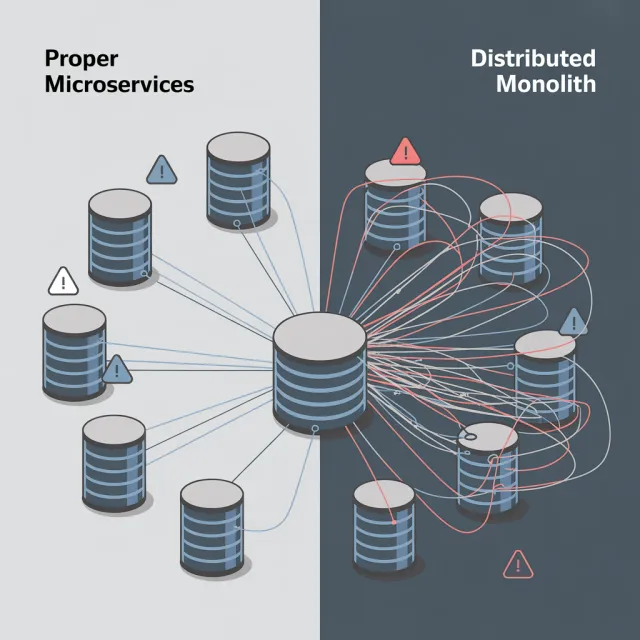
Siamese twin modules force a change in one place to ripple into another. How domain leakage and state-transfer events create a distributed monolith, and how contextual modularization with the right communication patterns cuts the connection, without cargo cult.
Architectural Kata is a flight simulator for system design: practice big architecture decisions in a safe setting instead of waiting years for a greenfield. How a kata session works, six perspectives that change the outcome, and why architecture is communication.
Architecture is the set of decisions that feel permanent after six months. An honest tour of monolith, layered, modular monolith, SOA, microservices and event-driven options: what each really costs and why the modular monolith deserves more attention than it gets.
AI agent architecture comes down to three strategies: single agent, sequential, and parallel. When one big prompt loses the plot, how sequential chains buy reliability, where parallel agents crush latency, and the pitfalls of each before you commit.
Zanzibar is how Google authorises billions of shared resources across Drive, YouTube and Calendar. A look at its relationship-based data model, the new enemy problem that forces strict consistency, and the Leopard system that keeps checks fast.
Ruby modules often beat classes for service objects: why a shell class like PasswordResetInitiator is procedural code in disguise, using a module as a toolbox, mixins instead of artificial inheritance, and Data objects for tidy parameters.
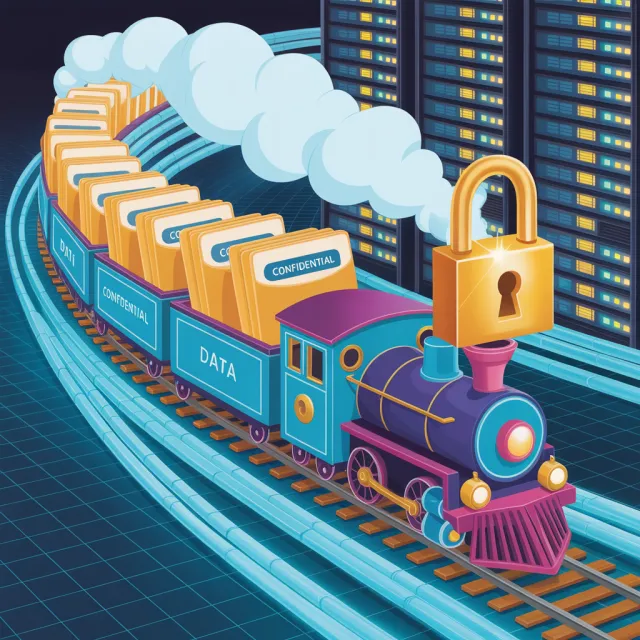
Event sourcing meets GDPR the moment a user asks to be forgotten and your log is append-only. Crypto-shredding is the elegant answer: encrypt personal data per user, delete the key, and design system boundaries so backups and read models forget too.
Business archetypes prove your 'unique' domain is usually a store selling something unusual. Map complex requirements onto universal building blocks: product catalogue, orders, entitlements, inventory for services, party and billing, and stop reinventing the wheel.
Pseudo-modularity looks like clean folders and rots underneath: a change in Products breaks Inventory tests and blocks three teams. Why noun-driven modules and a shared database create facade modularity, and what real module boundaries look like.
Party archetype fixes the 120-column User god object: model people and companies as parties, roles as context instead of identity, and relationships as first-class entities, so a customer who becomes a B2B partner no longer needs an is_partner flag and prayer.
 ddd
ddd