21 engineering lessons that survive contact with production: why simple code beats clever code, technical debt as a communication problem, what actually builds trust in teams, and how senior engineers pick problems. Field notes for real teams, not conference slides.
Rails partials feel free until a page renders hundreds of them. Benchmarks of five rendering strategies (inline ERB, partial loops, collection rendering and more) show which is fastest, why the helper trick backfires, and a practical rule for when to optimize views.
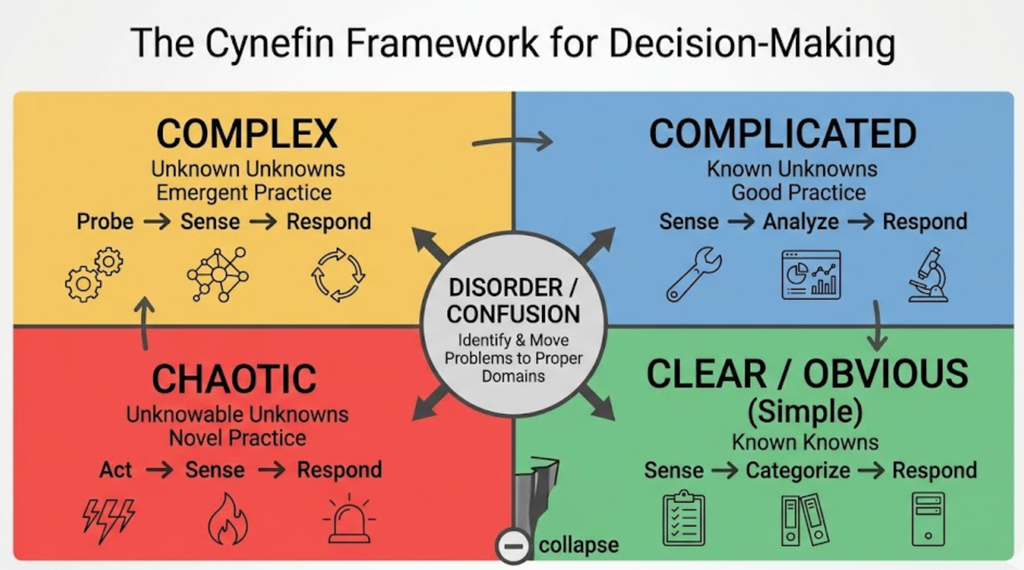
Cynefin framework in practice for engineers: classify a problem as clear, complicated, complex or chaotic before picking a process, so you know when Agile experiments beat Waterfall plans and what to do when production is down.
Structured logging lands in Rails 8.1 with the Rails.event API. How the Structured Event Reporter replaces regex-parsed log lines with JSON events, plus tags, context, schemas, debug mode, and how to subscribe and test events in your own app.
OpenAI serves over 800 million weekly ChatGPT users without database sharding. Inside the architecture: a single primary PostgreSQL, cascading read replicas, aggressive caching against thundering herds, and connection pooling pushed to its limits.
Snapshot databases only show the current mess, not who knocked over the chair. Event sourcing explained through an investigation lens: anatomy of an event, state recreation as time travel, why audit tables are a dead end, and the honest cost of eventual consistency.
Zanzibar is how Google authorises billions of shared resources across Drive, YouTube and Calendar. A look at its relationship-based data model, the new enemy problem that forces strict consistency, and the Leopard system that keeps checks fast.
Microservices promise independence and deliver network calls where method calls used to be. Why small and medium teams pay the highest price: chaos scaling instead of product scaling, lost shared context, operational overhead, and the way back to sanity.
A distributed monolith is what you get when microservice boundaries are drawn wrong. How to design autonomous modules in three phases: business analysis for boundaries, tight communication contracts, and deployment decisions driven by real architectural drivers.
Team Topologies in practice: Conway's Law and the reverse Conway maneuver, cognitive load, the four team types (stream-aligned, platform, enabling, complicated subsystem), and three interaction modes, with advice on introducing them in your organization.
Living documentation stops going stale with the P3 model: define the Purpose (why you document), the Process (how it stays current), and the Product (what readers get). A practical framework for engineers tired of outdated wikis and misleading docs.
The IDesign method by Juval Lowy structures software architecture for change instead of functional decomposition. Why decomposing by requirements breaks systems over time, the core IDesign principles, a three-step design process, and implementation tips.
 engineering