Generic types in TypeScript let one function, class, or interface work safely with many data types. What generics are, how a type parameter beats hardcoding a concrete entity type in a validation helper, and honest pros and cons before you use them everywhere.
Domain Driven Design in Ruby with a working example: aggregates, entities, value objects, and repositories built around a ProductCatalog, then extended with event-driven design and event sourcing, where projections rebuild state from events instead of a database.
Rails locking strategies for concurrent updates: optimistic locking with a lock_version column that works out of the box, pessimistic locking with lock! and with_lock, and practical ways to rescue and resolve the StaleObjectError that optimistic locking raises.
Rails eager_load, includes, preload, and joins each fight slow queries differently: LEFT OUTER JOIN versus separate queries, how includes picks its strategy, and when a plain joins is enough. Clear examples showing which loading method to choose for each situation.
TypeScript enums generate extra JavaScript at compile time and numeric enums are not even type-safe. Why enums can hurt bundle size and correctness, and two safer alternatives: assigning explicit string values or replacing enums with plain objects.
Ruby has four ways to load code and each behaves differently: load re-executes a file every time, autoload waits until first use, require loads once from the load path, require_relative resolves from the current file. Examples plus a summary of when to use each.
Ruby 3.2 runs in the browser through WebAssembly: embed Ruby in a script tag with ruby-wasm-wasi or drive the Ruby VM from JavaScript and mix it with HTML. Working examples plus honest limits: no threading or networking, and no extra gems without a custom wasm image.
Three ways to define constants and enums per class in Ruby: the ActiveRecord enum macro, a mixed style combining frozen constants with enum, and a dependency-free PORO version. Code for each solution and a comparison to help you pick the right one.
The Factory Pattern in Ruby, then a step further: using naming conventions and regular expressions so the factory auto-detects which notification class to instantiate. Complete code for both versions, plus when strict class listing is the safer choice.
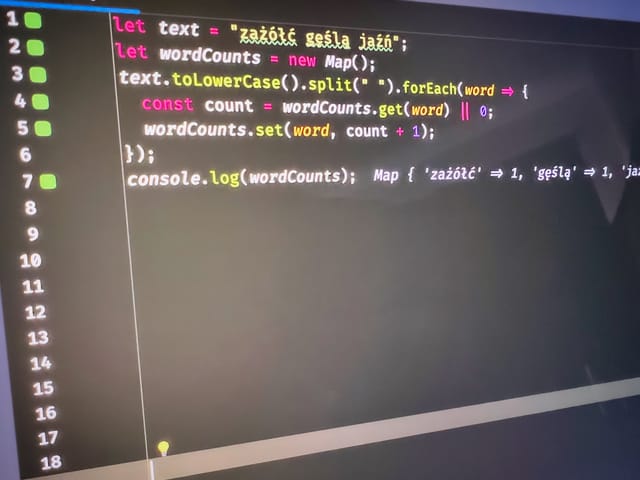
Map vs WeakMap in JavaScript comes down to keys and memory: WeakMap only accepts object keys and lets garbage collection reclaim unused entries, while Map holds onto everything. Differences, similarities, and practical guidance on when each one is the right choice.
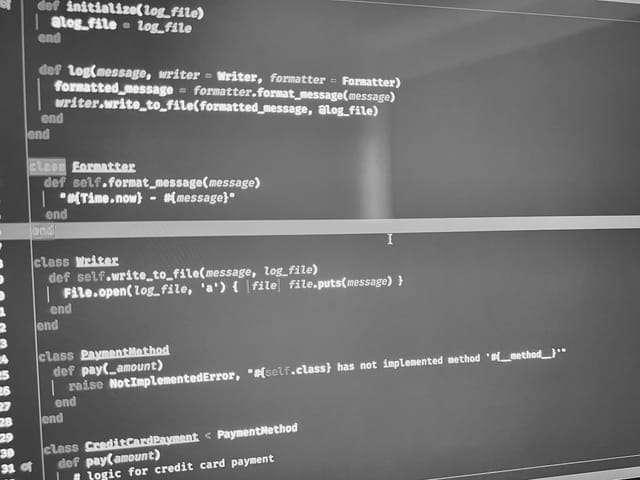
SOLID in Ruby with working code for every principle: Single Responsibility, Open-Closed, Liskov Substitution, Interface Segregation, and Dependency Inversion, plus a bonus rule on minimizing nesting and a fair look at the criticisms of SOLID.
 typescript