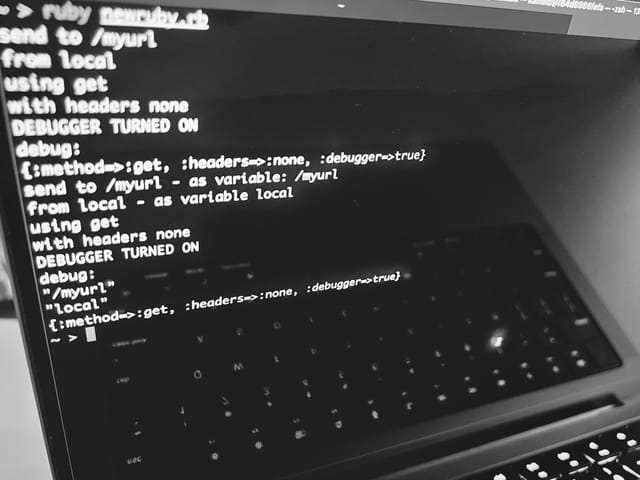
Ruby has four ways to load code and each behaves differently: load re-executes a file every time, autoload waits until first use, require loads once from the load path, require_relative resolves from the current file. Examples plus a summary of when to use each.
Ruby 3.2 runs in the browser through WebAssembly: embed Ruby in a script tag with ruby-wasm-wasi or drive the Ruby VM from JavaScript and mix it with HTML. Working examples plus honest limits: no threading or networking, and no extra gems without a custom wasm image.
Three ways to define constants and enums per class in Ruby: the ActiveRecord enum macro, a mixed style combining frozen constants with enum, and a dependency-free PORO version. Code for each solution and a comparison to help you pick the right one.
The Factory Pattern in Ruby, then a step further: using naming conventions and regular expressions so the factory auto-detects which notification class to instantiate. Complete code for both versions, plus when strict class listing is the safer choice.
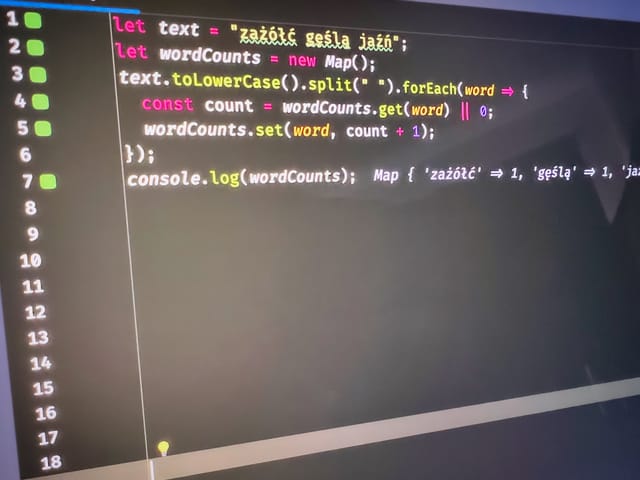
Map vs WeakMap in JavaScript comes down to keys and memory: WeakMap only accepts object keys and lets garbage collection reclaim unused entries, while Map holds onto everything. Differences, similarities, and practical guidance on when each one is the right choice.
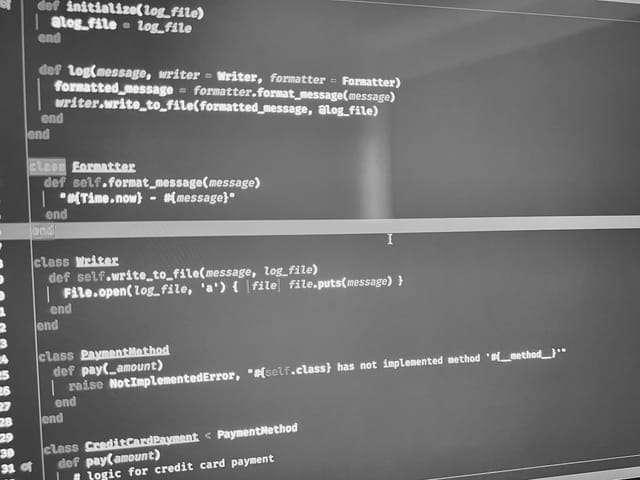
SOLID in Ruby with working code for every principle: Single Responsibility, Open-Closed, Liskov Substitution, Interface Segregation, and Dependency Inversion, plus a bonus rule on minimizing nesting and a fair look at the criticisms of SOLID.
Ruby 3.2 adds new syntax for anonymous arguments: forward positional and keyword arguments with bare * and ** and unpack them inside the method, no more digging through kwargs hashes. A before-and-after example shows how much cleaner argument passing gets.
Naive Bayes classification in plain Ruby: how prior and posterior probabilities decide the winning class, then a working spam filter that classifies email titles. Also where the algorithm shines: sentiment analysis, recommendations, and fraud detection.
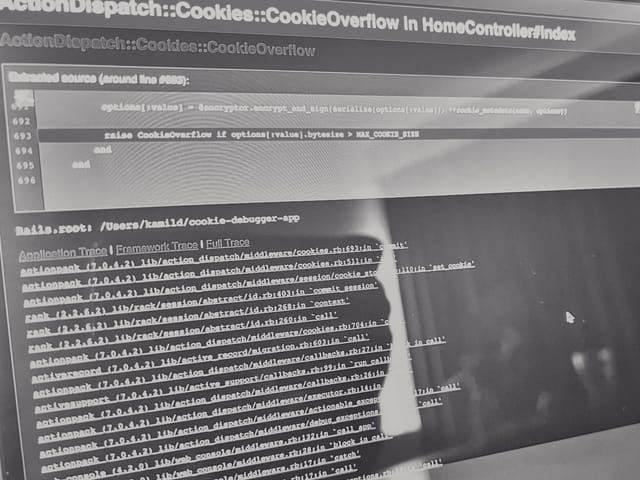
Rails CookieOverflow strikes when a cookie exceeds 4096 bytes. How to inspect cookies in Chrome dev tools, read the session dump on the error page, and use the cookie_debugger gem to log exactly which session key is eating the space, even in production.
ActiveRecord callbacks bring tight coupling, slower transactions, and painful debugging. Why before_save and after_save hooks in Rails models cause trouble, and how replacing them with an explicit process class makes the same flow readable and easy to debug.
Google Drive trash can quietly eat the space you free up when rotating files like CCTV recordings. A short Google Apps Script fixes it: an emptyTrash function, the Drive API service, and a time-based trigger that wipes the trash every hour, fully automatic and free.
Apipie looks like an easy way to document a Rails API, but check its limits first: no advanced type constraints like exactly_one_of, only partial OpenAPI support, and weak handling of output examples. What to weigh before picking the gem for a larger application.
 ruby
ruby