Database sharding in Rails step by step: create a separate database per shard, wire them up in database.yml, and query across them. Plus how sharding differs from partitioning, with a native PostgreSQL partitioning example done through Rails migrations.
Sidekiq basic_fetch vs super_fetch: open source Sidekiq fetches jobs with BRPOP and loses them when a process crashes, while Sidekiq Pro's super_fetch uses RPOPLPUSH with private per-process queues to recover orphaned jobs. What that means for queue reliability.
Domain Driven Design in Ruby with a working example: aggregates, entities, value objects, and repositories built around a ProductCatalog, then extended with event-driven design and event sourcing, where projections rebuild state from events instead of a database.
Rails locking strategies for concurrent updates: optimistic locking with a lock_version column that works out of the box, pessimistic locking with lock! and with_lock, and practical ways to rescue and resolve the StaleObjectError that optimistic locking raises.
Rails eager_load, includes, preload, and joins each fight slow queries differently: LEFT OUTER JOIN versus separate queries, how includes picks its strategy, and when a plain joins is enough. Clear examples showing which loading method to choose for each situation.
TypeScript enums generate extra JavaScript at compile time and numeric enums are not even type-safe. Why enums can hurt bundle size and correctness, and two safer alternatives: assigning explicit string values or replacing enums with plain objects.
Ruby 3.2 runs in the browser through WebAssembly: embed Ruby in a script tag with ruby-wasm-wasi or drive the Ruby VM from JavaScript and mix it with HTML. Working examples plus honest limits: no threading or networking, and no extra gems without a custom wasm image.
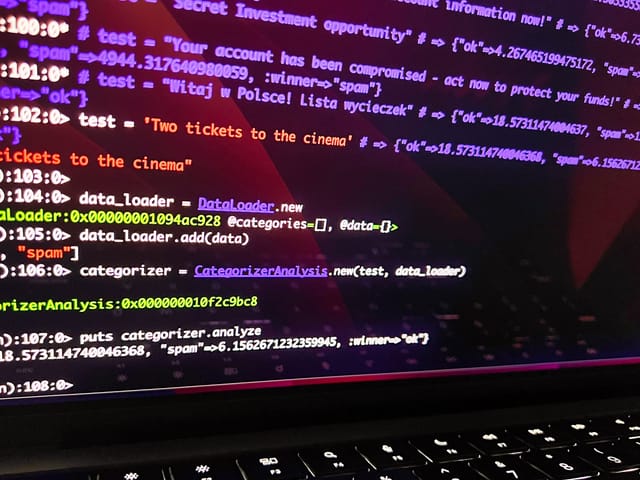
Naive Bayes classification in plain Ruby: how prior and posterior probabilities decide the winning class, then a working spam filter that classifies email titles. Also where the algorithm shines: sentiment analysis, recommendations, and fraud detection.
 sharding