SAFe explained without marketing slogans: why the Scaled Agile Framework exists, its four pillars, Agile Release Trains, the role architecture, PI Planning as the heart of the system, and the real risk of rigid agility when fifty teams try to move as one.
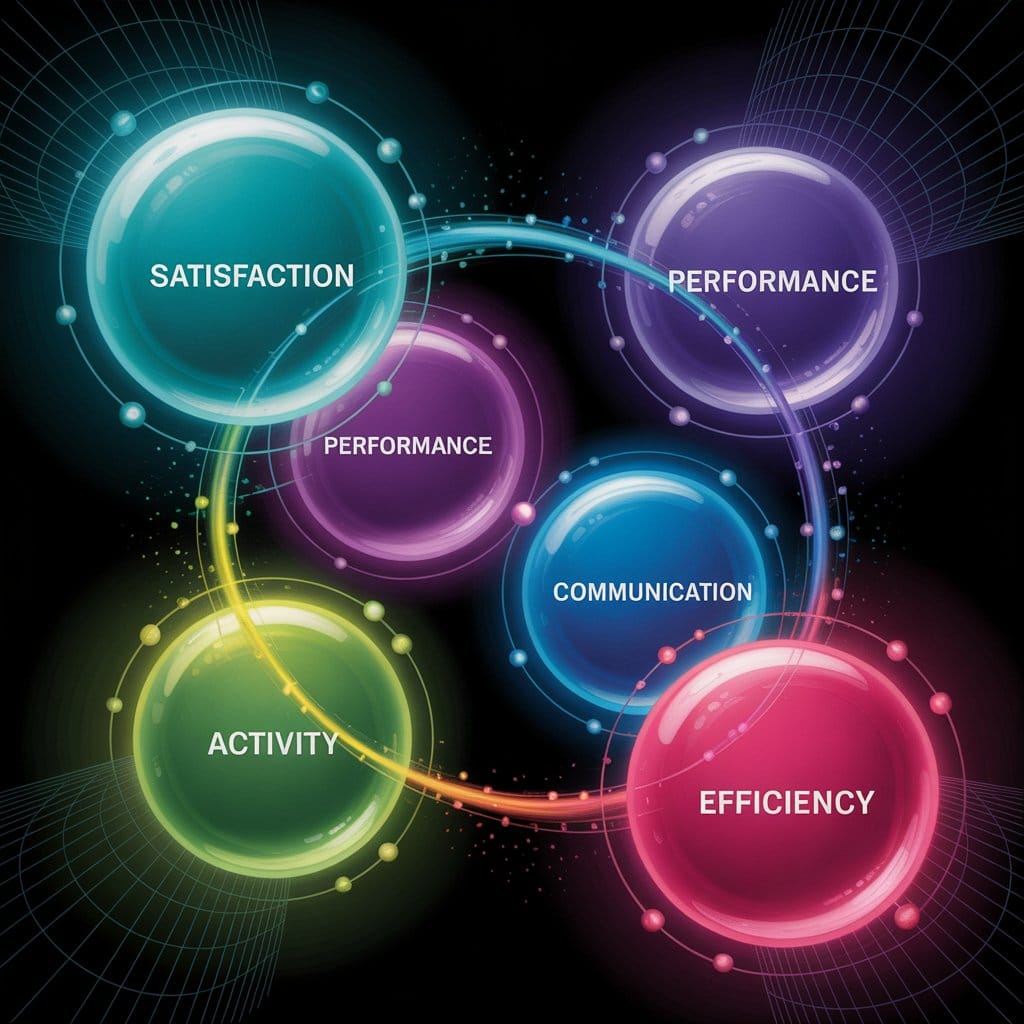
Measuring developer productivity with one metric backfires: lines of code and commit counts create misleading incentives. The SPACE framework tracks five dimensions (satisfaction, performance, activity, collaboration, efficiency) for an honest picture of a team.
Genetic algorithms meet Ruby Ractors: a script that repaints Lady with a Weasel generation by generation. Follow the full lifecycle (mutation, fitness scoring, crossover), see how Ractor parallelism speeds up scoring specimens, and view the final result.
Pattern matching in Ruby turns case statements into a precise switch over data shapes: match and destructure hashes from an API response, combine several patterns in one branch, capture values across patterns, and validate configuration. Ruby 2.7+ syntax examples.
Sidekiq basic_fetch vs super_fetch: open source Sidekiq fetches jobs with BRPOP and loses them when a process crashes, while Sidekiq Pro's super_fetch uses RPOPLPUSH with private per-process queues to recover orphaned jobs. What that means for queue reliability.
Domain Driven Design in Ruby with a working example: aggregates, entities, value objects, and repositories built around a ProductCatalog, then extended with event-driven design and event sourcing, where projections rebuild state from events instead of a database.
 safe-agile